Monday, August 1, 2022

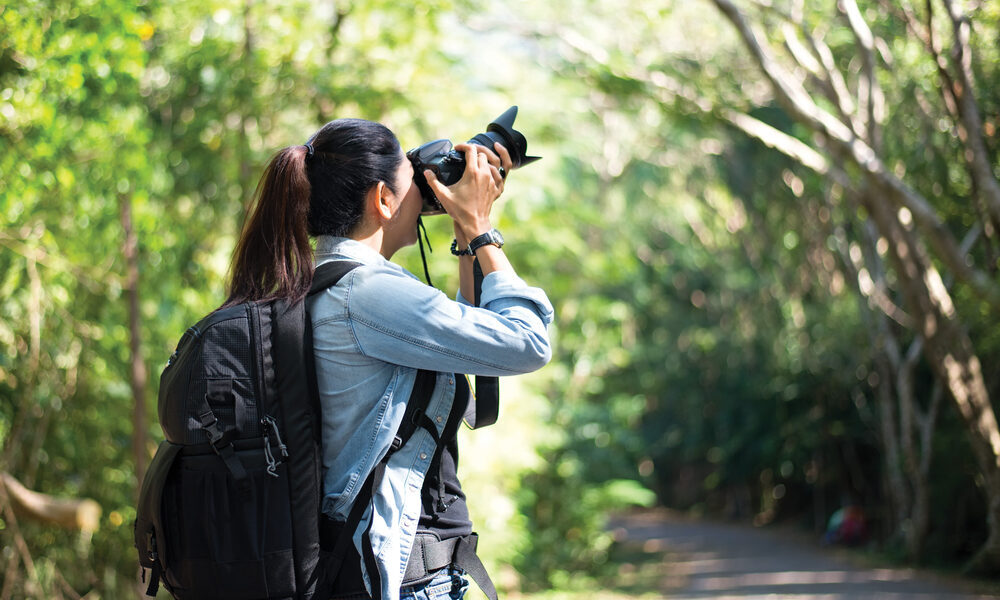
Take Note of These Tips for an Environmentally-conscious Shoot

wake-up.ws
Climate action is everyone's business. Photographers can help the environment by being conscious of their shoot locations and taking steps to minimize their carbon footprint. It's paramount for photographers of all levels to subscribe to actions that contribute to the restoration of the planet. Ram V Chary.

Keep shoots at home. Air travel is one of the most environmentally damaging things an individual can do. When planning a shoot, consider whether or not it can take place locally. If traveling is unavoidable, it would be great to consider travel methods that contribute the least pollution.

Take it easy on the gear upgrade. A new camera body or lens might be enticing, but is it necessary? Upgrading one's gear every time a new model comes out creates mountains of electronic waste that are difficult to recycle. If a photographer must upgrade, try to resell old equipment instead of throwing it away. Similarly, consider renting equipment instead of buying. This way, photographers only need to use a certain item for a specific time and don't have to keep it in their gear closet. Ram V Chary.
blueandgreentomorrow.com
Use natural light whenever possible. Using artificial light requires extra energy, and natural light is often much more flattering. If a shoot must take place indoors or at night, try to use as few lights as possible.

Lastly, encourage other photographers and artists to subscribe to environmentally friendly techniques. Spreading the word about climate change and its solutions is crucial in reversing the effects of global warming. Ram V Chary.

It can be tempting to forget about the environment as one's own impact may not seem particularly significant. However, one tiny positive action can snowball into a large positive action. Photography has the power to influence others and cause them to care for the environment a little more than they already do. Photographers must use their craft to help ease the consequences of climate change.

Thursday, June 30, 2022

Five Non-Design Skills Graphic Artists must Develop


pexels.com
It's no secret that graphic design artists must be skillful in their craft. They can take on commercial jobs or freelance careers if equipped with technical skills. Sure, design skills are critical, but these are not enough to help one climb the ladder of success.

Strong communication skills are a must. Graphic artists need to communicate their ideas clearly, both verbally and in writing. Artists also must be effective listeners to understand the client's vision for the project.

Writing skills are also integral in one's journey in the graphic design industry. Graphic designers are required to develop their concepts and ideas. They should be able to write clearly and concisely to present their work in the best light. Ram V Chary.


Organizational skills are another key aspect that separates the good from the great. Graphic artists must juggle different balls, often working on multiple projects simultaneously. They need to handle deadlines and stay organized so that everything gets done on time and to the client's specifications.
pexels.com


Flexibility is another virtue that will take a graphic artist far. The design industry is ever-changing, and artists need to be able to adapt to new trends and technologies. In addition, they need to be able to take constructive criticism, so they can learn from their mistakes and grow as artists. Ram V Chary.

Business skills are the last piece of the puzzle. Being a great artist in today's extremely competitive market is not enough. Graphic designers also need to be business savvy, understanding the basics of marketing and sales. They need to know how to rate their services to stay afloat financially. Ram V Chary.

One must be sure to include these non-design skills in their arsenal to enjoy a long and lucrative career in the graphic design industry.

Tuesday, May 31, 2022

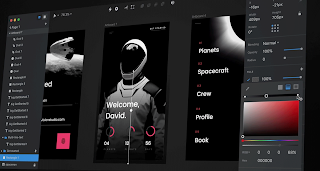
Seven Design Tools For Excellent Design Strategies

innovationtraining.org
Design is among the first things customers notice about a company, and it can be the difference between making a sale and losing a potential customer. That's why having effective design strategies in place is essential. Often, it comes down to having the right tool for the job. In this article, Ram VChary explores several options in graphic design software. 

Adobe Creative Suite is a comprehensive set of tools for graphic designers, containing everything from a basic photo editor to more complex tools for advanced design work. If you're serious about marketing your business effectively, Adobe Creative Suite should be part of your design arsenal. Cineware for Illustrator is an excellent tool for creating vector graphics, which can be used for everything from logos to infographics. If you're not familiar with vector graphics, they're images that can be scaled up or down without losing any quality. This makes them perfect for use in print and web design. Though Milanote is not strictly a design tool, it allows designers to organize their ideas creatively and systematically, which is crucial in the design process, explains Ram VChary .


toptal.com

MURAL allows creatives to collaborate effectively. MURAL is a digital whiteboard that lets you brainstorm ideas with others virtually in real-time. InVision is an excellent tool for prototyping websites and mobile apps. It allows you to create clickable prototypes of your designs to get feedback from users before launching your final product. Easle is a tool for creating mood boards and other visual inspiration. If you find it challenging coming up with ideas for your design project, Easle can help you get the creative juices flowing, notes Ram VChary.


Finally, one of the best organization and productivity tools is Evernote. It helps you keep track of everything from ideas to to-do lists. You can even use it to store design assets like photos and graphics.

Tuesday, May 3, 2022

How environmental photography has helped conservation efforts all over the globe

theguardian.com
Environmental photography is a genre of photography concerned with documenting the natural world and its changes. Photographers who often work in this genre have a strong environmentalist ethos and seek to use their photographs to promote the conservation of the natural world.

Veteran photographer Ram V Chary explains that when it comes to environmental photography, the saying "a picture is worth a thousand words" couldn't be more accurate. Images of our planet's natural beauty can profoundly affect our emotions and inspire us to take action to protect our environment.

Glimpses of intricate beauty

As an art form, environmental photography can help us appreciate the intricate beauty of nature and raise awareness about the pressing issues affecting our planet. By capturing glimpses of the natural world, we can see the impact that humans are having on the environment. Incentivizing learning about how we can make changes to improve things, explains Ram V Chary.

nationalgeographic.com

In addition to its educational value, environmental photography is used for advocacy purposes. Powerful images of pollution, deforestation, and other ecological crises can galvanize the public into demanding change. When people see the devastation that's being caused to our planet, they may be more likely to take action to prevent it.

Ultimately, environmental photography can help us appreciate the natural world and inspire us to take steps to protect it. By raising awareness of our planet's issues, photographers can play a crucial role in preserving our environment for future generations.

For those interested and who want to get into environmental photography, it's essential to learn about the different ways you can help make a difference. Ram V Chary recommends reading up on the issues, finding ways to reduce your eco-footprint, and using your images to promote change. With just a camera and a passion for preserving our planet, you can become an advocate for environmentalism through photography.

Monday, April 11, 2022

Creating a Graphic Design Resume? Consider These Tips:


creativebloq.com
A good resume piques the interest of potential employers and clients. When creating a resume, one needs to make sure it stands out from the crowd. A great way to do this is to showcase an artist's graphic design skills. With a designer's career riding on a resume, developing an impressive one can be challenging. Here are a few tips to consider when creating a graphic design resume.

Make it clear and concise. A designer's resume must be easy to understand. Avoid burying important information in sections that may be hard to find. One should highlight their experience, talent, skill, and creativity in their resume. Consider writing professional experiences in reverse chronological order. This allows the interviewer, employer, or client to see a designer's most recent project. Then, they would see how one has progressed over the years or months, leading to their most recent work. Ram V Chary.

hubspot.com

Another effective resume format highlights one's graphic designer skills rather than their work history. This design focuses more on a designer's technical strengths while still giving interviewers a glimpse of their work experience. Many may be drawn to using a resume format that combines their technical skills and work experience. A successful way to do this is to use good typography, one that is neat and easy to read. Ram V Chary.

When creating a professional profile, it would be best for a designer to share their current work position and career direction. A designer's professional achievements should also be included in that section. One's work experience, education, additional skills, and certifications must be included in the resume's professional experience section. Also, a designer must pay close attention to their graphic design portfolio. An essential part of the resume, the portfolio shows a designer in the best light. An applicant must carefully select works that best highlight their strengths and skills. Ram V Chary.

Tuesday, March 29, 2022

Five keys to building a strong design skillset


shillingtoneducation.com


The design industry is tough to crack, especially when it's as competitive and demanding of artists. Carving out an impressive career in graphic design requires more than just having good taste or skills; you need knowledge about how things work on the surface level and a ton of creativity. Ram V Chary.

Practice drawing positive and negative values of images to train the eyes to decipher space and spot various levels of value. To do this, start by choosing an object to draw. Then, draw the negative space surrounding the object, defining the object's shape with fields of color instead of lines. Pay more attention to textures. These may not seem important but are integral to adding visual impact. Either pronounced or subtle, textures often work with almost everything.

Don’t ignore space. Many graphic designers show off their skills by eliminating negative space. However, excellent designers use the negative space to help untrained eyes to read easier. Using negative space in designs is particularly effective in web layouts and minimalist concepts. Design around the principles of dominance and priority. Apply these principles in designs that may be heavy in information. Ram V Chary.

creativebloq.com


Consider the rhythm of the page
. With types such as progressive and fluid, rhythm is regarded as the principle that allows the human eye to move from one element. The progressive rhythm happens when a clear sequence of the eyes must move between elements. The fluid rhythm mimics the movement of water. These keys will open many doors of design opportunities for artists to thrive in their craft.

While formal education in graphic design may be too much for some, it provides foundational skills that can be used across different disciplines. Online courses and YouTube content can help enhance an artist's design skills. However, these may not be enough to build a good design foundation. Ram V Chary.

Wednesday, December 29, 2021

What is environmental portrait photography?

Image source: travelphotographyguru.com


Environmental portrait photography is a type of portraiture that incorporates something in the surrounding environment to produce a more interesting or meaningful finished product. For example, a photographer might take a picture of someone standing in front of a tree and decorate this with an assortment of leaves and twigs, producing an intriguing composition. Ram V. Chary.

The environmental element can be used in a number of different ways to produce the desired effect. It is important that this element be added in such a way that it acts like an accessory and does not detract from the main subject. Ram V. Chary.

The most common example of environmental portrait photography is when someone chooses to take pictures of people or pets against a backdrop of flowers, trees, or other natural objects. Ram V. Chary.

Other examples include:

• A close-up picture of a flower or plant with someone standing in front of it, as if the person is simply being framed by nature. This often produces an interesting effect that looks more artistic than traditional photography.

Image source: digitalphotomentor.com


• Photographing people around a specific area that is relevant to their interests. For example, a photographer might take a picture of someone in front of a baseball field if they're a fan of the sport, or outside their favorite bar if it is related to their love for adult beverages.

Environmental portrait photography can also be done by incorporating man-made objects into the mix, such as pieces of architecture or large buildings. This kind of photography is often called street photography.

The idea behind environmental portrait photography is to make the picture more interesting and meaningful than it would be if it was taken with a traditional background (like a white wall). Using this technique also provides the photographer with the ability to showcase their subject's interests and personality to a greater extent than is possible in other types of photography. Ram V. Chary.